

Why is it needed?
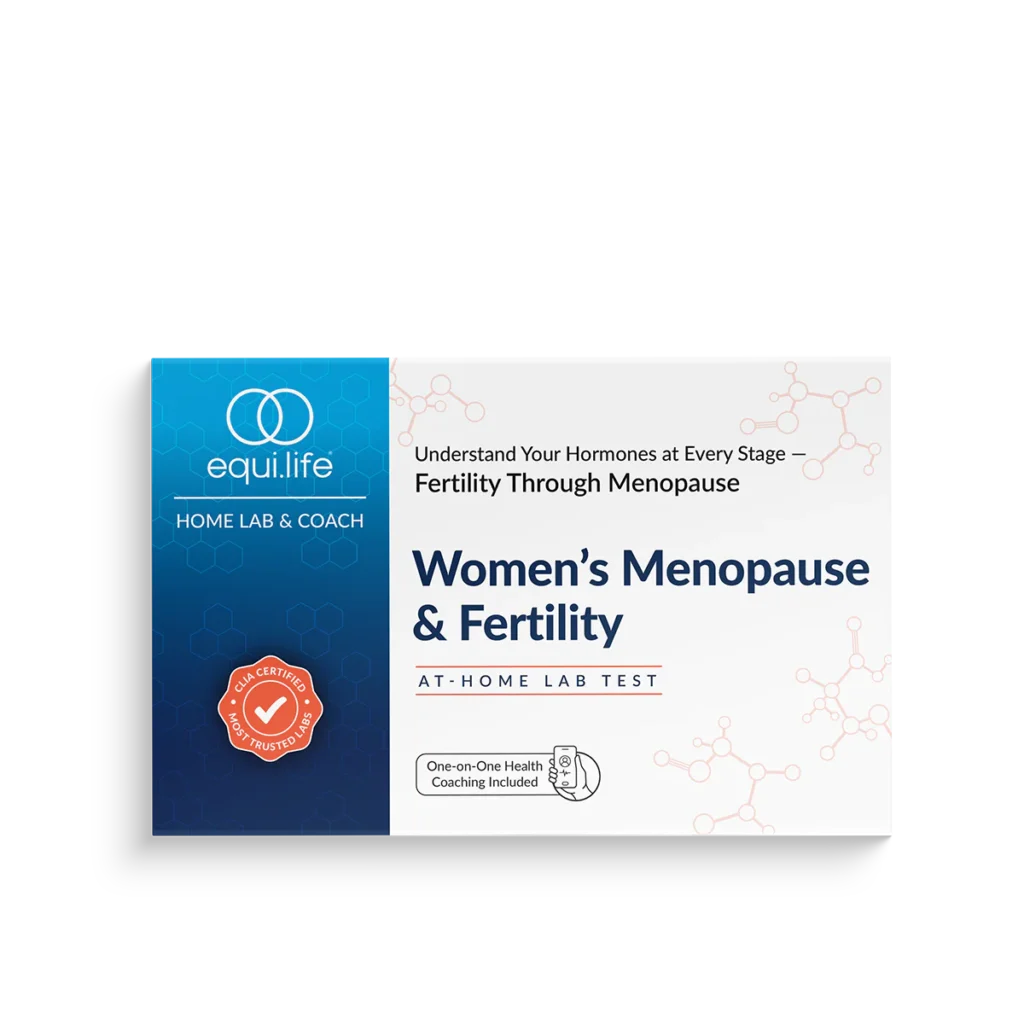
Your monthly menstrual cycle is likely not something you look forward to. Nonetheless, when it arrives off schedule it can be a cause for concern, especially if you are experiencing other challenges including trying to become pregnant. Whether you want to assess your reproductive health or want to gain insight on irregular cycles, this convenient at-home test provides a comprehensive look at a broad range of hormones, so you can gain valuable insight about how to address potential imbalances at a root cause level.
- Please be sure to collect and return your sample within 14 days of receipt of your lab test. All lab tests expire within 6 months of purchase
$499.00

Understanding Your Cycle
The female body is nothing if not complex! While we consider estrogen and progesterone to be the main female sex hormones, there is much more to consider when struggling to become pregnant or when trying to get the bottom of irregular cycles. In addition to these main hormones (and their ratios), this test also looks at testosterone, DHEA, a full range of thyroid hormones as well as those related to ovulation and egg implantation. Additionally, the stress hormone cortisol is included to ensure an in-depth assessment of your biggest (and most sensitive) health challenges.
Why this Test?

Irregular Cycles

Fertility Concerns

Increased Stress

Low Mood

Increased Body Fat
Low Energy
What is measured?
A steroid hormone produced in your adrenal glands, affecting several aspects of your body, including regulating your body’s response to stress.
Cortisol, the body’s stress hormone, is made from precursors that include progesterone. If stress levels are high on an ongoing basis, progesterone levels may decrease, disrupting the balance of estrogen and progesterone in the body.
Additionally, cortisol can inhibit secretion of TSH (thyroid stimulating hormone), leading to partial suppression of thyroxine, the main hormone produced by the thyroid gland.
Test looks at a range of female hormones and their critical ratios, from estrogen, progesterone, testosterone, DHEA and more.
-
- Estradiol (E2): The strongest estrogen, made by the ovaries and present in the body before menopause.
- Progesterone: A hormone that stimulates and regulates important functions including preparing the body for conception and maintaining pregnancy, regulating menstrual cycles and more.
- Estradiol (E2)/Progesterone Ratio: As we age, many women may continue to produce the same level as estrogen, while progesterone production drops, causing something known as estrogen dominance, making the ratio of estrogen to progesterone a key marker.
- Testosterone: Produced in a woman’s ovaries, combined with estrogen, testosterone helps to repair a woman’s reproductive tissues and bone mass.
- Anti-Müllerian Hormone (AMH): Made by the ovaries and gives insight into how many eggs may be available, helping to better understand overall reproductive health.
- Luteinizing Hormone (LH): LH is the hormone responsible for ovulation. Looking at LH during key times in your menstrual cycle can ensure normal ovary function.
- Follicle-Stimulating Hormone (FSH): FSH is made by your pituitary gland, playing a key role in sexual development, controlling the menstrual cycle and stimulating growth of eggs in the ovaries. Looking at FSH levels can help determine if a woman has a normal level of eggs for her age.
- DHEA: DHEA is the highest circulating steroid in your body and decreases naturally as we age. DHEA is known as a precursor hormone, which is a chemical that gets converted into other hormones in the body including testosterone and estrogen (E2).
Looking at the full range of thyroid hormones including; T3, T4, TSH and TPOab
- Triiodothyronine (T3): One of the two main hormones produced and released by the thyroid gland. Your body converts Thyroxine (T4) into Triiodothyronine (T3). While the balance of each hormone is key to understanding the bigger picture, too much T3 may be an indicator of an overactive thyroid gland.
- Thyroxine (T4): One of the two main hormones produced and released by the thyroid gland. Because T4 is needed for the conversion of T3, the balance of each of these hormones is of vital importance.
- Thyroid Stimulating Hormone (TSH): Your hypothalamus, located in your brain, first releases something called thyrotropin-releasing hormone, which in turn triggers the pituitary gland to produce TSH. Without TSH, T3 and T4 would not be released, causing the intricate system of hormones to fail.
- Thyroid Peroxidase Antibody (TPOab):Antibodies to TPO are produced within the body and can be indicators of an underlying immune system imbalance. Understanding your levels of TPO antibodies can further help you get to the root cause of a potential thyroid imbalance.</p>